
The Delhi High Court has ruled that criminal cases involving sexual offences against children, particularly under the POCSO Act, cannot be settled by the survivor or their family. Justice Sachin Datta emphasised that such heinous offences have a serious societal impact and quashing proceedings based on a compromise would undermine the statute's objectives and justice.

'My argument was straightforward: If the Constitution allows this reservation and SC/ST and OBC candidates are already getting reservation in private institutions -- backed by Constitution Bench orders -- then not extending the same to EWS candidates directly violates the 103rd Amendment and Article 14, which guarantees the right to equality.'
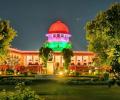
The Supreme Court of India has strongly condemned custodial violence as one of the worst forms of human rights violations, acknowledging it as an unfortunate reality in the country. The court clarified that the 24-hour constitutional deadline for producing an arrested person before a magistrate begins from the moment of detention, not formal arrest. This ruling aims to curb police abuse and ensure judicial oversight, referencing past cases like the Bhagalpur blindings and DK Basu guidelines.

The Supreme Court on Friday refused to suspend the 10-year rigorous imprisonment sentence handed down to journalist Tarun Tejpal in a 2013 rape case. The bench stated it was not a fit case for suspension, despite arguments from Tejpal's counsel. The Goa government, meanwhile, is seeking an enhanced sentence for Tejpal.

We don't recall ever seeing photographs of a Supreme Court judge being sworn in, which is why we are sharing glimpses of Monday's ceremony at the highest court in the land with you.

Chief Justice of India Surya Kant declined a meeting request from opposition leaders Rahul Gandhi and Mallikarjun Kharge, stating that discussing sub judice matters would violate judicial ethics and the principle of Separation of Powers. He advised them to file a formal petition with the Supreme Court instead of seeking an administrative meeting. The opposition had sought to discuss issues including the Chief Election Commissioner, arrests, and public transport disruptions.

The Supreme Court's High-Powered Enquiry Committee (HPEC), tasked with investigating alleged violence and police excesses during CJP-led protests at Jantar Mantar, has reported receiving hardly any complaints from affected individuals. Despite extensive efforts to solicit complaints via a portal, email, and newspaper notices, the response has been minimal. The court has urged petitioners to forward materials and encourage victims to come forward, while also accepting a member's request to be relieved from the panel.

The Supreme Court has ruled that banks must compensate victims of digital fraud, especially in cases like "digital arrests," if the fraud results from the financial institution's failure in due diligence. The court is examining RBI's proposed KYC amendments and stressed the need for a regulatory framework that includes victim compensation and preventive measures. It also highlighted the issue of mule accounts and the need for banks to alert police about suspicious transactions.

The Supreme Court clarified on Wednesday that it has not yet made a final ruling on the legality of the Election Commission's "logical discrepancy" category used for scrutinising voter details during the Special Intensive Revision of electoral rolls. The court noted that its previous permission for this exercise in West Bengal was only an interim arrangement and its Bihar SIR decision was not a final determination of all related issues.

The Supreme Court-appointed High Powered Enquiry Committee (HPEC) will hold a sitting on October 29 to hear affected persons and record evidence regarding alleged violence, including pellet gun use and harassment of female protesters, during the July Jantar Mantar protests. The five-member panel, chaired by Justice R Subhash Reddy, was formed after petitions alleged police excesses and counter-allegations of violence against police. An online portal is also available for submissions.

Chief Justice of India Surya Kant asserted that the judiciary cannot be browbeaten, during a hearing on a plea against a political march to the Supreme Court by Rahul Gandhi and other opposition leaders on October 12. The plea alleges an attempt to obstruct the judicial system and seeks a ban on political demonstrations within court premises. The court has issued notices to the leaders and ordered the preservation of CCTV footage from the incident.

The Gauhati High Court has highlighted a "very grim picture" regarding the expulsion of foreigners in Assam, noting that 1,16,946 declared foreign nationals are yet to be apprehended and expelled. The observation came during the dismissal of a writ petition by a declared foreigner, Hamida Begum, whose legal challenges were exhausted, leading to her impending expulsion.

The Supreme Court has agreed to hear an application alleging that Congress leader Rahul Gandhi pushed a pregnant journalist during a march to the apex court on October 12. The matter was mentioned by senior advocate Gaurav Bhatia, who stated the journalist was three months pregnant and required hospitalisation. The court will hear the application on October 26 or October 27, alongside other pleas related to the October 12 march and electoral roll irregularities.

The Supreme Court has expressed shock and concern over the increasing number of digital arrest scams, questioning why educated individuals continue to fall victim despite public awareness. The court highlighted a case where a woman lost Rs 2.5 crore and suggested that banks should act as a protective umbrella for customers. It is considering directing banks to compensate victims and face prosecution if fraud occurs due to their negligence, noting that digital arrests have already reduced by 50 per cent after its intervention.

'It was a disaster on his part to give an oral remark which allowed ascertainment of the religious character of places of worship.' 'This disrupted the social harmony of the country.'
Major opposition leaders, including Rahul Gandhi and Mallikarjun Kharge, have filed a petition in the Supreme Court challenging alleged large-scale voter deletions and irregularities in the Special Intensive Revision (SIR) of electoral rolls. This action follows a "March for Democracy" and a declined request to meet the Chief Justice of India regarding "vote chori" allegations.

The Supreme Court has instructed the Election Commission to probe allegations of irregularities, specifically concerning bulk Form 7 applications, during the special intensive revision of electoral rolls in Uttar Pradesh. The court's directive came after petitioners raised concerns about the deletion of voters' names, with the EC acknowledging bulk submissions but stating they were not acted upon due to being false.

Congress leader Rahul Gandhi and other INDIA bloc leaders have moved the Supreme Court seeking permission to submit 48 written questions to the Election Commission regarding its decision-making process for the nationwide Systemic Improvement of Electoral Rolls (SIR). The plea aims to get sworn responses from EC officials on alleged voter exclusions and changes to online registration systems, questioning the transparency and collective decision-making within the EC.

Justice A M Khanwilkar, the second senior-most judge of the Supreme Court, retired on Friday and thanked bar association leaders for their 'love and affection'.

'Government cannot pick and choose as to against whom they want to take action and against whom they do not want to take action.'

Mohammad Sharif, an accused in the 2007 Rampur CRPF camp terror attack case whose death penalty was previously set aside by the Allahabad High Court, was shot dead on Tuesday. The incident has drawn political reactions, with a BJP MLA alleging former minister Azam Khan's support for the accused. The Supreme Court is currently hearing a plea challenging the High Court's verdict in the original terror case.

Former Supreme Court Justice Abhay Oka warned that major cities might be forced to adopt mandatory face mask usage within 20-25 years due to environmental degradation. He stressed that protecting the environment is a fundamental constitutional duty, countering the misconception that humans own the Earth. Justice Oka also encouraged students to study law and use AI responsibly.
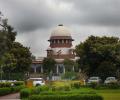
The Joint Parliamentary Committee (JPC) on simultaneous elections had scheduled an "informal interaction" with Supreme Court judges, which was later cancelled by the apex court. The Supreme Court deemed the meeting inappropriate as the proposed constitutional amendment could become subject to judicial review. JPC Chairman PP Chaudhary defended the panel's initial decision, citing precedents, while DMK MP P Wilson, who mooted the idea, expressed disappointment and argued against the notion that such interactions violate separation of powers.

The Supreme Court has directed Shiv Sena (UBT) MP Sanjay Raut to appear in person on November 17 for contempt proceedings concerning remarks about Chief Justice of India Surya Kant and the judiciary. Journalist Nikhil Wagle is also directed to appear virtually. The apex court had issued show-cause notices to both on October 16 following a plea by the Supreme Court Bar Association (SCBA).

The Supreme Court has dismissed an appeal by the Uttar Pradesh government, upholding the Allahabad High Court's decision to stay Samajwadi Party leader Azam Khan's conviction in a fake birth certificate case. The apex court also granted similar relief to Khan's wife and son, criticising the High Court for denying them parity.

The Supreme Court of India has sought proposals for establishing a permanent financial corpus to support patients suffering from Spinal Muscular Atrophy (SMA), a rare genetic disorder requiring expensive treatment. This initiative follows an earlier case involving comedian Samay Raina, which led the court to examine broader systemic concerns for SMA patients.

The Supreme Court has directed the Delhi High Court to reconsider a plea by 11 members of the Delhi Gymkhana Club challenging the Centre's decision to take over 27.3 acres of land leased to the club and subsequent eviction proceedings. The members argue that the government-nominated management cannot effectively challenge the Centre's actions, which they deem a "colourable exercise" of power and a violation of fundamental rights.

The Supreme Court has issued notice to the Election Commission and its chief regarding a plea by Sanjay Raut and 12 others, including Rahul Gandhi, concerning alleged irregularities in electoral roll revisions. The court provisionally entertained Raut's petition but stated he would need to explain his conduct, while also addressing allegations of attempts to 'browbeat' the judiciary.

The Eknath Shinde faction strongly defended its lawmakers in the Supreme Court, asserting that dissent within a political party does not constitute defection under the Tenth Schedule of the Constitution. They argued that their actions aimed to restore the Shiv Sena's original ideological identity and that the anti-defection law should not be used to suppress internal disagreement.
The Supreme Court has directed the Centre, states, and Union Territories to swiftly establish dedicated courts to handle the "alarming rise" in cases under the Narcotic Drugs and Psychotropic Substances (NDPS) Act. The directive aims to set up all 449 required NDPS courts within six weeks. Additionally, the court noted progress in establishing special courts for cases probed by the National Investigation Agency (NIA), with several states committing to expedite their operationalisation.

The Supreme Court has permitted Ashish Mishra, an accused in the 2021 Lakhimpur Kheri violence case and son of former Union minister Ajay Mishra, to travel to his hometown for Diwali celebrations. The court also emphasised the need for a timely conclusion of the trial, noting that 90 out of 131 witnesses have been examined and a new judge and prosecutor have been appointed.

The Supreme Court has rejected former actor Anita Advani's plea to recognise her relationship with late superstar Rajesh Khanna as marriage, terming it "luxury litigation" and upholding previous high court decisions.

The CBI has withdrawn approximately 20 petitions from the Supreme Court that sought to transfer cases related to the 2021 West Bengal post-poll violence outside the state. The agency cited "changed circumstances" for its decision, which comes after the state's CID initiated fresh inquiries and reopened cases concerning the violence.

The Supreme Court expressed serious concern over the Enforcement Directorate summoning advocates for offering legal advice or representing clients during investigations, calling for guidelines on the matter.

The Supreme Court has directed authorities to address concerns regarding passenger amenities at railway stations, including safe drinking water, sanitation, and medical facilities. The directive follows a plea highlighting deficiencies based on a CAG report, urging remedial measures to ensure passenger health and safety.

The Supreme Court on Thursday sought responses from the Centre and Delhi Police regarding an October 11 order that de-notified Jantar Mantar as a protest site and designated three alternative venues. The court will examine the rationale behind the relocation, especially concerning the efficacy of Jantar Mantar and the impact on the fundamental right to protest.
The Supreme Court has ordered the reinstatement of R Saravanan, a deputy registrar of Periyar University, who was dismissed for alleged disproportionate assets. The court observed that dismissal is akin to a "death penalty" for a government servant and criticised the university's inquiry for lacking evidence, upholding the single-judge bench's decision.
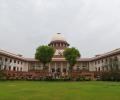
The Supreme Court has refused to stay contempt proceedings initiated by the Bombay High Court against a judicial officer for an "unwarranted outburst" in court. The apex court observed that a judicial officer cannot shout at judges and deemed the officer's conduct as "gross indiscipline," advising him to tender an unconditional apology to the High Court. The High Court had initiated proceedings after the officer allegedly blamed the court administration in a high-pitched tone during a hearing on fast-track court posts.

The Supreme Court of India has directed WhatsApp and other intermediaries to propose measures against digital arrest scams and cybercrimes. Simultaneously, the court emphasized that financial institutions, including banks, must be held accountable and compensate victims for losses due to their failure in exercising due diligence. The RBI has been asked to submit a list of authorized financial institutions, and law enforcement agencies are to report on FIRs and suggest prevention strategies.
The Supreme Court has expressed concern over the increasing trend of filing criminal cases, particularly rape charges, after consensual relationships fail. The court clarified that physical intimacy during a functioning relationship cannot be retrospectively branded as rape merely because the association ended. It emphasized the need to distinguish between genuine absence of consent and regret over past consensual acts, warning against the weaponisation of criminal law.
